
 Dry Floodproofing

Keep Floodwater Out Entirely
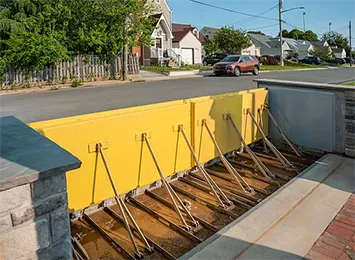
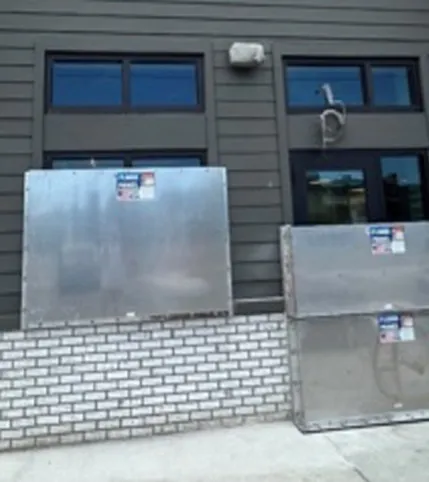
Dry floodproofing waterproofs a building to prevent floodwaters from entering. It is preferably implemented for commercial and industrial buildings and — when applied in compliance with NFIP requirements — can qualify a commercial building for flood insurance premium reduction.
Based on laboratory testing, a conventionally constructed building can generally be dry floodproofed up to 3 to 4 feet in vertical height, provided a structural analysis confirms the exterior walls can resist hydrostatic and hydrodynamic flood forces without failure.
- A sump pump and potentially a French drain system should be installed inside to collect any seepage.
- Closure barriers — preferably passive — are required at all pedestrian and vehicular openings.
- Not suitable for buildings with basements or crawl spaces unless the first floor is fully impermeable to floodwater from below.
- Not recognized by NFIP for insurance premium reduction when applied to residential buildings.
Best suited for:
 Wet Floodproofing

Let Water Flow Through Without Causing Damage
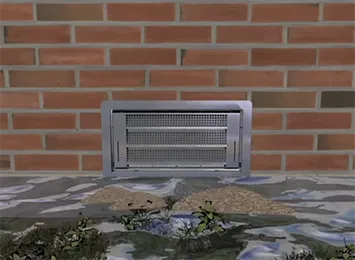
Wet floodproofing allows floodwater to enter a building or a portion of a building without resulting in structural damage. It can function as a stand-alone measure or be combined with other mitigation strategies such as elevation or dry floodproofing.
As a stand-alone measure, all construction materials and finishes must be water resistant, and all utilities must be elevated above the design flood elevation. When applied to large commercial and industrial buildings, it should be paired with a flood warning system and a preparedness plan for evacuation.
- All materials and finishes must be water resistant when used as a stand-alone measure.
- Utilities must be elevated above the design flood elevation.
- Not recommended for large flood depths, high velocity flows, or significant debris conditions.
- Not suitable for flash flood conditions where hydrodynamic forces cannot equalize quickly enough.
Best suited for:
Floodproofing Systems at Work