

Flood Vulnerability & Mitigation Assessments
Comprehensive evaluations that identify flood risk and shape effective mitigation strategies—giving property owners, communities, and decision-makers the data they need to protect what matters most.
Why Flood Risk Assessment Matters
Floods are a significant natural disaster that can affect any community, and their frequency is expected to increase due to climate change and rising sea levels. This reality highlights the crucial need for comprehensive risk assessments that go beyond surface-level observations to capture the full picture of vulnerability.
Flood vulnerability assessments serve as essential tools for decision-makers and stakeholders developing strategies to safeguard at-risk properties and communities. They form the foundation upon which every effective mitigation project is built—turning uncertainty into actionable insight.
Flood Vulnerability Assessments
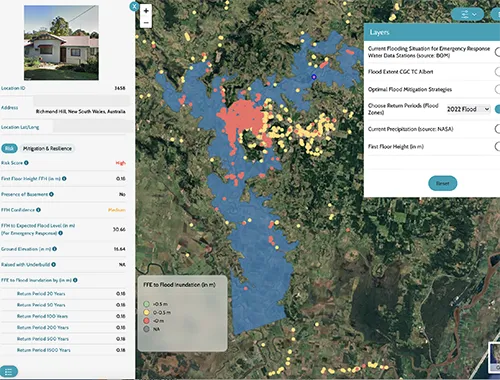
A flood vulnerability assessment is a structured evaluation of the potential risks and vulnerabilities associated with flooding in a specific area or community. Its primary purpose is to identify the factors that make a location susceptible to flooding and to inform plans that reduce those vulnerabilities.
These assessments take into account a range of factors—including environmental and socio-economic characteristics like elevation, terrain slope, socio-economic status, and soil conditions—to build a complete picture of risk that single-factor analyses miss.
Vulnerability is shaped by physical, social, economic, and environmental conditions that heighten a community's or property's susceptibility to flood impacts. Importantly, vulnerability changes over time and reflects how well a community or property is prepared to minimize the consequences of a hazard. A thorough assessment captures all of these dimensions.
Flood Mitigation Assessments
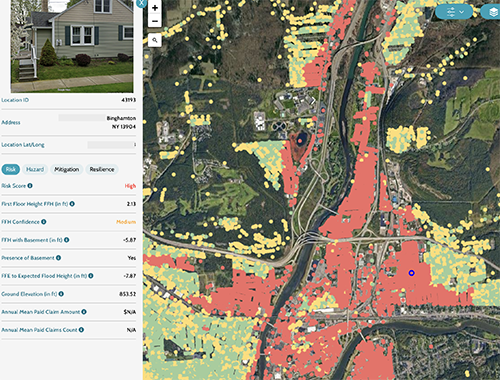
Flood mitigation assessments use multiple data sources to analyze risk at the site, building, and community levels. Flood characteristics—duration, areal extent, depth, and velocity—are integral to any meaningful evaluation, alongside an examination of building construction materials and site conditions.
That data is then incorporated into the assessment of possible solutions for mitigating the identified vulnerabilities. The flood mitigation retrofit project itself is the direct result of this assessment process, ensuring the chosen approach matches the actual risk profile.
Once the assessment is complete, the appropriate project type is selected from a range of techniques: elevation, dry and wet floodproofing, relocation, acquisition, and basement or crawlspace abandonment. A scope of work is developed to produce the project budget and financing plan, followed by final designs, bidding, financing, and construction. The result: reduced flood risk, insurance premiums that reflect that reduction, and stabilized property values in high-hazard areas.
Key Aspects of a Comprehensive Assessment
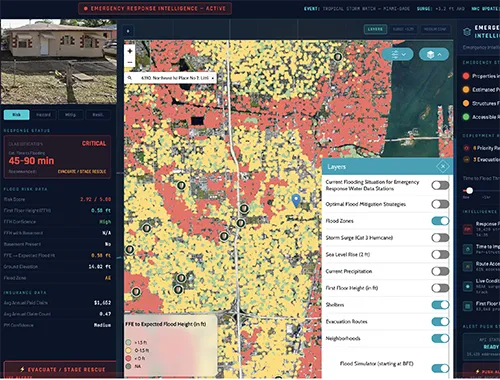
A thorough flood vulnerability and mitigation assessment evaluates risk across multiple dimensions—each one essential to building an accurate picture and an effective plan.
Physical Factors
Elevation, terrain slope, soil conditions, and structural characteristics of buildings on site. These physical realities define how floodwater will behave and what the structure can withstand.
Environmental Conditions
Watershed dynamics, drainage patterns, climate trends, and proximity to water bodies. Environmental context determines both the likelihood and the changing nature of flood events over time.
Social & Economic Factors
Socio-economic status, community preparedness, and the capacity to respond to and recover from flood events. Vulnerability is not only physical—it reflects how prepared a community is to absorb impact.
Flood Characteristics
Duration, areal extent, depth, and velocity of expected flood events. These parameters drive the engineering decisions behind every mitigation strategy and determine which solutions are feasible.
Utility & Infrastructure
Mechanical, electrical, and plumbing systems, along with site utilities and access routes. Protecting critical infrastructure is often as important as protecting the building envelope itself.
Project Planning
Scope of work development, budget creation, financing pathways, and construction sequencing. Sound planning translates assessment findings into a buildable, fundable mitigation project.
From Assessment to Action
An assessment is only as valuable as the action it enables. Once a flood vulnerability and mitigation assessment is complete, the appropriate mitigation project is selected from techniques including elevation, dry and wet floodproofing, relocation, acquisition, and basement or crawlspace abandonment.
A scope of work is developed to produce the project budget and financing strategy. Plans and final budgets are completed, the project moves to bid and financing, and construction follows. Each step is informed by the original assessment, ensuring the chosen approach is the right fit for the actual risk on site.
The outcome is measurable: reduced flood risk, insurance premiums that reflect the reduced exposure, and stabilized property values in high-hazard areas. FMIA members provide the expertise needed at every stage—from initial assessment through final implementation—helping property owners and communities translate risk awareness into lasting protection.
Ready to Understand Your Flood Risk?
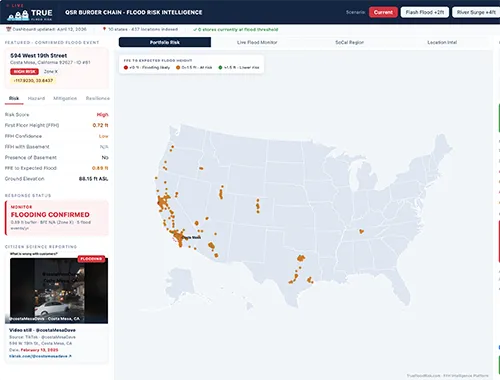
A comprehensive vulnerability and mitigation assessment is the first step toward effective flood protection. Connect with an FMIA member to evaluate your property or community and develop a mitigation strategy built on solid data.